

"Take away love and our earth is a tomb".
~Please dont frown! For you never know who may be falling in love with your smile!~
------------------------------------------------------------ -----------------------------
Another long article, go and grab a coffee or tea or hot chocolate :-)).
Well, I don't know how basic this is to some of you ;-) but its solely on Islam.
Article called:
Islamic Dilemma and the Sufi Message
By Jay Kinney
As the West comes to grips with the terrorist attacks and threats, there is a strong temptation to see things in simple terms of Good and Evil. But before we are stampeded into a “clash of civilisations,” we need to step back for a moment and examine the real forces at work. Islam is undergoing its own crisis, with many conflicting voices clamouring to be heard. The angry cries for Jihad threaten to drown out the saner counsel of Islam’s living mystics, the Sufis. What follows is one attempt to clear the air, in the hope that disaster might be averted.
Ironies abound. Amidst all the uproar it is easy to forget that in Arabic, “Islam” means “surrender,” and that it is derived from the same root word as “peace.” Those who are disposed to dismiss religion itself as an irrational scourge are happy to see this as just another case of religious hypocrisy. After all, if we add up all the casualties caused by holy wars, crusades, inquisitions, and other battles taken up in the name of God, the endless line of corpses would seem to give the lie to religious claims of a higher morality or compassion.
“All religions are founded on the fear of the many and the cleverness of the few,” Stendhal cynically observed. But, as Oscar Wilde noted: “Who is a cynic? A man who knows the price of everything and the value of nothing.” While religions have failed to live up to their own ideals, the same charge can be levelled against Democracy, Communism, Humanism, Monarchy, Science, and every other means of human self-organisation and inquiry. Of this we can be sure: no sooner will a model for social benefit be formulated than a dozen uses will be found to employ it for social ill. Social institutions – by their very nature – become arenas for the exercise of power and greed: the forces of the reptilian brain which take us back to Step One, over and over again.
Yet despite the abysmal record of folly and destruction, there is an enduring human need for a sense of spiritual connection to something greater than ourselves. Religions may be imperfect, but they have nevertheless provided a moral anchor for billions of people throughout history. Even if a believer’s faith be relatively unsophisticated and dependent on others’ say so, when sincerely held, it does offer some sense of connection with the Universe. This is no small thing, but it hardly exhausts the possibilities.
Fortunately, there is clear testimony that some individuals and groups have been able to fully realise the kernel of truth that too often lies slumbering within the religious husk. Anyone who has given sincere attention to the accounts and writings of genuine mystics, such as Meister Eckhart, Ibn ‘Arabi, or Plotinus, cannot fail to see that a higher consciousness, which encompasses both the Infinite Source of Being and the human individual, is possible.
This consciousness, as a direct and authentic experience, does not depend for its existence on theological or religious doctrine. Indeed, mystics say that this consciousness itself clarifies and illuminates doctrine.
Religions, as theological and social structures built around the realisations of their founders, must accommodate themselves to and address the traditions and customs of the cultures in which they evolve. Had Jesus been born in a Chinese manger or had Buddha been enlightened while sitting under Newton’s apple tree, the religions that followed in their wake would have been far different affairs. In order to better understand the current state of Islam, a brief look at its origin and evolution is in order.
There is no question that Muhammad, the Prophet of Islam, was a profound mystic whose lot it was to be born into a Bedouin tribal society shaped by intense family ties, trading routes, localised pagan gods, and relatively primitive cultural forms. The Qur’anic message, articulated by Muhammad in poetic Arabic, was received in discreet parts over the course of 22 years – years marked by attacks on the Prophet and his small band of followers by other hostile tribes.
Muhammad’s communion with the Real was called upon to provide guidance to the Muslims as they struggled to defend their faith amidst war and social chaos. As observed by some Qur’anic scholars, such as Fazlur Rahman, some passages of the Qur’an are addressed to a specific time and place, while others are of a more universal nature. This is important to note, as it accounts for some of the seeming contradictions between verses, as well as the problems that arise when verses are quoted out of context. But in any event, the Qur’an’s identity as a dialogue with the Supreme Being is so intertwined with the circumstances of its birth that, to this day, Muslims only consider a Qur’an to be the Qur’an if it is in its original Arabic. All translations into other languages are merely “interpretations” and inexact facsimiles.
This is an admirable attempt to preserve fidelity in transmission, though one wonders if even this devotion to the original text isn’t a case of closing the barn door after the mule is gone. For the special value of a living mystic or prophet is the dynamic nature of their expression of the Real, to which they have access. The Qur’an’s words in the absence of Muhammad’s living interpretation, like Jesus’s parables without his own commentary, are susceptible to a dogmatic crystallisation induced by the limited understanding of later followers who risk mistaking their own piety for insight.
One early attempt within Islam to head off a decline in religious practice following Muhammad’s death, was the collection and preservation of hadiths (quotations from the Prophet), among which are the hadiths qudsi (Prophetic quotations conveying messages from God, given outside of Qur’anic passages). Hadiths typically contain testimonies, by the Prophet’s companions, of Muhammad’s suggestions and judgments on the details of daily life and specific questions of practice, law or family concerns. The hadiths qudsi are understood to provide an extra-Qura’nic source of Divine guidance. A secondary source of information is the “Sunna,” a recording of the Prophet’s own personal habits and practices, including quite intimate reports by his wives.
Unfortunately, even preserving the specifics of the Prophet’s interpretations, insights and behaviours still finds them anchored to their time and place. At the same time, there is much dispute over various hadiths’ authenticity, with many being suspected of later manufacture for partisan purposes.
Islam’s institutionalisation, once the Prophet was gone, saw Muhammad defined as the most perfect exemplar of Islam, with all questions of right behaviour and scriptural meaning referred back to his own statements and behaviour, or to the Qur’an. The best means that later Ulema (scholars and jurists) could suggest in rendering decisions was “analogy” and “consensus of the community” – processes that have left little room for creative insights or inspired interpretations.
Because Muhammad served his community as resident mystic, prophet, commander in chief, and social arbiter, Islam – again, in taking him as its exemplar – developed an ideal of theocratic rule as its civilisation grew. As in Medieval Christianity, there was little sense of separate spheres for religion and civil society – Islam was “a way of life.” The combined figure of Sultan (Ruler) and Caliph (Religious leader), though hardly consistent throughout the succession of Islamic empires, was in place in the final centuries of the Ottoman Empire, only to collapse along with the implosion of the Ottomans following WWI. The Caliphate was abolished by Ataturk in his effort to constitute a secular Turkish republic on the ruins of the Empire.
The inroads made by European colonialism in the waning decades of the Ottomans, and particularly post-WWI, helped stir the pot of Arab nationalism, Pan-Arabism, and radical Islam, all of which arose in response to the splintering of Islamic civilisation. There was no single Islamic solution put forth that commanded universal support. A multitude of Islams, ethnic nationalisms, and dictatorial regimes carried the day.
It is this sequence of events that brings us to the present reality of a decentralised and dispirited Islamic world mourning its former glories, riven along nationalist and sectarian lines, resentful of previous Western colonialism, and defensive towards an encroaching globalisation that promises to be more pervasive and invasive than mere colonialism ever was.
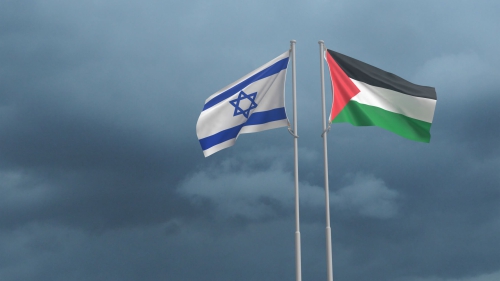
The lightning rod for Muslim resentment towards this state of affairs has come to be symbolised, for better or worse, in the creation of Israel, in what was previously Palestine. What was seen by Jews as a refuge from Nazi persecution, and by the Zionists as the fulfilment of a scriptural and political dream, was seen by many Muslims as an exclusionary Western wedge, achieved by Haganah, Irgun, and Stern Gang terrorism: an ethnically-defined state disenfranchising its former residents, and a surrogate for the present Western superpower, the USA. The Israeli/Palestinian blood-feud, terrible enough in itself, has metastasised throughout the Muslim body, taxing the Islamic immune system, and readily diagnosed as the underlying Western cancer which can be blamed for every painful social malady.
As stated at the beginning, ironies abound. The very virtue that enables millions of Muslims to feel a brotherhood across national and racial divides – the sense of an Umma (community) of believers – also fuels the presumption of extremist Islamic terrorists to represent the whole of Islam in their assault on the West. In truth, bin Laden and Co. (or Islamic Jihad or Hezbollah) no more represent Islam than the judicially-selected Bush regime represents the whole of Western democracy. Behind each camp’s stated purposes and PR, loom the reptilian brain’s Will to Power – the opposite of the mystic’s realisation and of the stated goal of most religions: surrender to the will of God.
Religion, devoid of the mystic’s link to the Real, may not save us – in fact when religion is used as a rationale to wage political warfare, it may condemn us to a hell on earth of its own creation. But that doesn’t mean that we should turn our backs on the spiritual impulse toward realisation and human perfection that lies at the root of religion. The survival of Sufism within the broader confines of Islam is a significant case in point.
Sufism is a term coined by Western orientalists for the mystical path in Islam, commonly known as tasawwuf by Muslims. I’ll continue to use it here for the sake of simplicity. Sufism isn’t a sect or subgroup within Islam, so much as it is an expression of the mystical understanding underlying Islam.
Despite Muhammad’s roles of prophet, commander in chief, and social arbiter, it was his vocation as mystic that preceded and subsumed his other responsibilities. According to Sufi tradition, Muhammad acknowledged Ali, his nephew and son in law, as his spiritual successor, i.e., as the one Muslim within his inner circle who had also been blessed with a potent mystical awakening. Because the roles of spiritual and political leader had been combined in Muhammad, they became the object of the power struggles following the Prophet’s death. Those struggles eventually resulted in the division between Sunni and Shia Islam, though that need not concern us here. Suffice it to say, that for most Sufis, Ali represents the continuation of the mystical impulse within Islam, and nearly all Sufi brotherhoods trace their initiatory lineage back to Ali.
The operating premise of Sufism is that the mystical consciousness (but not the Prophetic role) of the Prophet and Ali is possible for others. The encounter with the Real – in which the dynamic paradox of the Infinite and the finite, the Absolute and the particular is known and experienced – is not relegated to the distant past or possessed by a designated few, but is within the capacity of everyone, should they so desire.
Authentic mystics have usually occupied a position in tension with established religion, because their dynamic relationship with the Infinite has often placed them at cross-purposes to the theological certainties promulgated by religious authorities. It is to Islam’s credit that it made more room for its mystics than did Christianity, its chief rival. This leeway was sometimes due to the patronage of Sultans who were interested in tasawwuf, and sometimes due to the popular support that some saints enjoyed. This is not to say that Sufis were always honoured or even tolerated. They were sometimes persecuted as heretics, executed or merely silenced; but whether welcomed or deplored, they were able to pass along their wisdom and methods from generation to generation.
The predominant means of this transmission was through Sufi brotherhoods or Orders (tariqas) – caretakers of continuous lines of teaching methods derived from the founding inspiration of a particular mystic. Unlike Christian contemplative monastic orders that demanded celibacy and a sequestered life, the Sufi tariqas were generally composed of everyday people, with families and outside professions. Thus, up to the present, the Sufis have provided a street-level access to mystical experience.
Jalaluddin Rumi, whose mystical poetry has enjoyed great popularity in the West in recent years, is the best known representative of Sufism. His emphasis on Love as the key entry-point to communion with the Divine has led many people to assume that this is true of all Sufism. However, just as Yoga can be subdivided into several parallel paths to the Divine, including Hatha (physical), Jnana (mental), Bhakti (devotional), etc., so each Sufi order has its own flavour and emphasis, derived from its founding saint. Still, whatever their emphasis or methods, all Sufis share the ultimate goal of a spiritual awakening or “opening,” where the seeker comes to intimate knowledge of the Real.
This may sound terribly remote from anything of practical value, especially if one imagines this awakening to be a state of everlasting bliss which renders its recipient incapable of dealing with mundane affairs. However, Sufism teaches the need for the mystic to “descend” again into daily life, where he can function in normal situations while maintaining an expanded awareness. This is truly the path of Muhammad, who from the mystical point of view stands as exemplar for the “completed human:” one who is both physically and spiritually alive, and able to interpret his own Qur’an.
Such individuals light the way for others, often serving inconspicuously as conduits of inspiration and encouragement. A pharmacist in Istanbul, a shopkeeper in Fez, a poet in Damascus – there is no predicting where one may find those who are called “friends of God.”
Fundamentalist movements originate out of a form of spiritual inspiration themselves. Despairing of the decadence and corruption they perceive in the present expression of their Faith, the fundamentalists – as their name suggests – try to return to the pure fundamentals.
For “religions of the Book” – religions based on revealed scriptures – this commonly takes the form of cleaving even closer to scriptural authority. But rejecting the succeeding centuries of religious evolution, and not privy to dynamic interpretation of the founder or of mystics, the fundamentalists commonly opt for the most literal readings of their holy texts. And when those texts are as ambiguous and nuanced as the Qur’an, this can lead to confusion and incoherence, thinly veiled by rigidity.
The result is a proliferation of mini-Caliphs or Popes, certain of their own purity and the truth of their interpretation, cut off from scholarly commentary and discourse, and contemptuous and dismissive of all who disagree. In eras of profound change and discord, the fundamentalists reduce the Infinite Source of Being to a static icon created in their own image, in a tragic reversal of the creative process.
Those who kill and terrorise in the name of God demonstrate their own distance from any real connectedness with the Whole. This is the dilemma of Islam at the dawn of the 21st century. The Umma of believers are themselves held hostage by the terrorists who claim to represent them. As Zia Sardar has written in The Observer (UK - Sept 23, 2001): “. . . all good and concerned Muslims are implicated in the unchecked rise of fanaticism in Muslim societies. . . . We have been silent as they proclaim themselves martyrs, mangling beyond recognition the most sacred meaning of what it is to be a Muslim. . . . The terrorists are among us, the Muslim communities of the world. . . . And it is our duty to stand up against them.”
The Prophet affirmed that “Allah’s Mercy supersedes his Wrath.” (Hadith al-Qudsi). One can only hope that the moderate Muslim majority will draw upon the wisdom of those within their own tradition who know that Mercy intimately and find the courage to stand up.
___________________________________________________________
© Jay Kinney, 2001. Jay Kinney is the co-author, with Richard Smoley, of Hidden Wisdom: A Guide to the Western Inner Traditions (Penguin/Arkana, 1999). He is editor of The Inner West (forthcoming from J.P. Tarcher, 2002). More of his writings can be found at http://www.gnosismagazine.com.
The above article appeared in
New Dawn No. 69 (November-December 2001)
Angel.
Bismillah
Assalamu alaikum
brothers , i'm a new kid in the block...
Alhamdulillah, it 's nice to know, that lot of good islamic topics being discussed on...
Concerning this mail, i have some of my opinion, which i would like to share with all of u..
If i am right , the author of so called article is Non muslim....It is a real worst situation, where non muslim trying to teach wat is Islam ?! and there is no response from our muslims brothers...
first of all the article talks about chaos and confusion right now in this world....to build background for their orginal intended message...
The intention is alhamdulillah clear to me..these non muslims trying to uses this sufi method to pacify muslims resurgence...
"After all, if we add up all the casualties caused by holy wars, crusades, inquisitions, and other battles taken up in the name of God, the endless line of corpses would seem to give the lie to religious claims of a higher morality or compassion."
The author of the article failed to understand the action and meanings of Islamic war.It is a fight against oppression. It is a fight against people, who were rebellious to god(Allah).Islamic soldiers are the first group of fighters ,who practised Do's and Don't 's even in the war.No way anybody can include islamic wars in the above category.Moreover, it is the same mystic prophet, who led hundreds of people in the battle field...so how could one gives important to one practice of beloved prophet and discardes the other.
"In truth, bin Laden and Co. (or Islamic Jihad or Hezbollah) no more represent Islam than the judicially-selected Bush regime represents the whole of Western democracy. Behind each camp’s stated purposes and PR, loom the reptilian brain’s Will to Power – the opposite of the mystic’s realisation and of the stated goal of most religions: surrender to the will of God"
who gives authority to anybody to judge the other .No one has knowledge about other except Allah(S.W.T).Tell me, can anybody say America(i refer government and it s foreign policies) is a friend of muslims?!
Even, it is easy to say ,it is a enemy of Muslims...I am not sure about the type of their fight...but their intention of fighting against enemy of muslims , even though they are mightier than us...can't be belittled.
"Despite Muhammad’s roles of prophet, commander in chief, and social arbiter, it was his vocation as mystic that preceded and subsumed his other responsibilities."
Ok., he had another way of living, to receive messages form Allah(s.w.t),no one denies that...But allah (s.w.t) says the religion is completed...then, y we have to live that way of life..when its doors are closed until the day of judgement..
"This may sound terribly remote from anything of practical value, especially if one imagines this awakening to be a state of everlasting bliss which renders its recipient incapable of dealing with mundane affairs. However, Sufism teaches the need for the mystic to “descend” again into daily life, where he can function in normal situations while maintaining an expanded awareness. This is truly the path of Muhammad"
This article had talked about how nice it would be , if all the muslims are sufis.....had they narrated wat they have to do to be sufi....?!
If you happens to know, u might wonder, where did prophet taught all this ?!
you will find answer like this...he has taught Ali(R.a)...ok
y did our prophet(pbuh), benefactor of all the mankind teach his nephew alone...?!
You will find they are mouth shut ..
i don't want to comment on the authenticity of their claim, that they have tradition upto Ali (r.a)....but watever they practice...is not taught by prophet(pbuh) to his followers.....atleast not for everyone.
So, if a prophet (pbuh) decided not to take this form of his live to everyone, y does anyone ,who claims to follow his principles do so?!
Islam is not about jus' believing in something....It also about putting into practice of which u believe...
Alhamdulillah....i have try to give out my opinion in this issue...
Allah(S.w.t) knows the best...
wassalam
Hello Angel,
Thank you for such a beautiful article. I must say it is awesome how a non-muslim has understood sufism so well, yet there are muslims who fall short in doing so.
You will find only those contradicting the article who are either not well informed with this science of Islam, or those who have an agenda to malign it.
Most popularly among those are our salafi or wahabi brothers, and who's authority do they do this? Not many, only a handful of scholars, the path of whom can be converged to Ibn Taymiyah.
How intelligently has the author mentioned hadith qudsi here ... the salafi brothers have to reject this portion of our hadith books to deny tasawwuf as the heart and soul of Islam, to call it nothing but a mere 'sect'.
They dont know that if they reject this 'sect' (as per their definition of tasawwuf), they will have to burn 80 out of every 100 books of islamic literature, and they will have to throw in garbage 80% of the learned scholars of islam, coz most of the knowledge we have on islam is streaming from the great sufi scholars. But wait a minute, they have already accomplished that, that is why their islam is so dry and devoid of beauty.
May allah forgive their mistakes and enlighten them with His nur, ameen!
Nausheen
Be not heedless of thy Lord
for even the blink of an eye,
Lest He directs His attention towards you,
and finds you unawares.
"Despite Muhammad’s roles of prophet, commander in chief, and social arbiter, it was his vocation as mystic that preceded and subsumed his other responsibilities."
Ok., he had another way of living, to receive messages form Allah(s.w.t),no one denies that...But allah (s.w.t) says the religion is completed...then, y we have to live that way of life..when its doors are closed until the day of judgement..
Bismillah ir-Rahman ir-Rahim
What is Sufism?
His Eminence, Shaykh, Sidi Muhammed Saâ`id Al Jamal
Imam and Khateeb, Al Aqsa Mosque, Al Quds
Tasawuf, by definition, derives from Safa. In other words, it is the sum of two words, Tahliya and Takhliya. Tahliya, means to acquire every good characteristic, and Takhliya, is to get rid of every bad characteristic which Allah (Tabaraka wa Taâ'ala) does not approve nor accept. In other words, Tahliya is to decorate one's self with the Divine Commandments, which have been transmitted by Rasoolullah, (salla Allahu alaihi wa sallam) in his holy traditions, and the book of Allah which has descended upon his heart as a revelation carried by Jibreel Alaihi Salaam, as he (salla Allaho alaihi wa sallam) said: I have left in (among) you two things, if you hold fast to them you will never go astray, the book of Allah and the Sunnah of his Prophet. So, the first Sufi is Al-Mustafa (the chosen one) salla Allho alaihi wa sallam, for the first one who went (entered) into seclusion is Rasoolullah, salla Allaho alihi wa sallam, that was in Ghar (cave) Hiraa, where he used to contemplate (meditate) yatahannath, and worship Allah according to the milla (religion) of our Master Ibrahim, which is the religion of Tawheed, (Allah's oneness). So, he worked on purifying his nafs, (self), his holy nafs, and his holy heart, and his holy soul, until Allah sent down to him Jibreel, who said to him: Iqra (read), he, salla Allaho Alaihi wa sallam, said: Ma ana bi Qari (I don't know how to read), that happened twice, in the third time, (Jibreel) said: Iqra bismi Rabbika la thee khalaq. ( Read in the Name of thy Lord, the one who created). The Prophet, Salla Allaho alaihi wa sallam, said: I have been sent to perfect the honrable Akhlaq (morals, ethics, morality, (good) manners). Allah says: "You are on (have) great Akhlaq."
Therefore, Tasawwuf, basically, is (comes) from purifying the Selves, Hearts and Souls, to have all of them directed towards Allah Ta'ala. The Mutasawwif (Sufi) must be a perfect example, an embodiment, as if he is a Qur'an walking on earth, and an embodiment of the Sunnah. He, salla Allahu alaihi wa sallam, was the first to call for the refinement of the Selves, the Akhlaq, the Souls and purifying them. How can a human being be happy, unless his Self and his heart, being purified, and become attached to his Lord. Therefor our master the Great Beloved said in the Hadith which has been narrated through a number of different chains of transmissim (Mutawatir), and related by Sayyidina Omar Ibn Al Khattab, "One day while we were sitting with the Messenger of Allah (may the blessings of Allah be upon him) there appeared before us a man whose clothes were exceedingly white and whose hair was exceedingly black; no signs of journeying were to be seen on him and none of us knew him. He walked up and sat down by the Prophet (may the blessings and peace of Allah be upon him). Resting his knees against his and placing the palms of his hands on his thighs, he said: O Muhammad Al Salaamu Alaika, He (salla Allahu alaihi wa sallam) said: Wa alaika as Salaam. He said: tell me about Islam. The Messenger of Allah (may the blessings and peace of Allah be upon him) said: Islam is to testify that there is no god but Allah and Muhammad is the Messenger of Allah, to perform the prayers, to pay the zakat, to fast Ramahaan, and to make the pilgrimage to the House if you are able to do so. He said: You have spoken rightly this is Islam. We were amazed at him asking him and saying that he had spoken rightly. He said: Then tell me about Iman. He said: It is to believe in Allah, His angels, His books, His messengers, and the Last Day, and to believe in Divine Decree, both the good and the evil thereof. He said: You have spoken rightly. He said: Then tell me about ihsan (and it is the third station), He said: It is to worship Allah as though you are seeing Him, for even when you are not (in lam takun) seeing him, yet truly he sees you.
How does that happen--it happens when you are not (in lam takun)*
Then He took himself off and I stayed for a time. Then he said: O Umar, do you know who the questioner was: I said: Allah and His Messenger know best. He said: It was Gabriel, who came to you to teach you your religion.
Therefor, there are three stations, Islam, that is, of course, what Rasoolullah has brought in the form of Kitab and Sunnah, it organizes the relationship between the Human being and his Lord, through the Ibadaat, and between him and his follow human beings through Mu'amalaat (rules of conduct, behavior, transactions), and his relationship with himself. This is the external (outward, outer) aspect, the Shari'a. A person might pray, while he is in the masjid, but after he leaves the masjid, he would cheat or steal, therefor nothing would be left (remain) of his salat, for one gets out of his salat only the part (portion) where his mind is present ( ma akila minha), then, on the day of Qiyama it will be folded like a piece of old cloth and thrown at his face and tell him: may Allah ruin (waste) you the way you have ruined me. So, outwardly, the sufi is eager to establish the rituals of Allah, the sufi is a man of determination, who does not look for easy ways (rukhas). He performs salaat on time, gives zakat, and never misses any thing.

There is a second stage in ascending, it is Iman, which is what takes place in the heart and confirmed by actions.
However, there is yet a third stage. We have the Shari'a, the Tariqh, and the Haqiqa. The tariqa (way) is the Iman, and the Haqiqa is the Ihsan. We have said: To warship Allah. How? How to worship him? Doesn't every muslim worship Allah? He prays, doesn't he? It is to worship him as though you are seeing him. How do you see Him? How can I see Him? In lam takun. If you are not, (literary, in Arabic, it means- if you do not exist-) You have to have no existence along side with His existence, to destroy all images, to see the Haqq, through the (khalq) creation, to walk with Allah. This is where Tasawwuf and the Muhammadan inheritors (Al worrath al Muhammadioon), those who inherited the Muhammadan weigh (Al Thiql al Muhammadi) and the Muhammadan reality ( Al Haqiqa al Muhammadiyya) come from. He, salla Allahu alaihi wa sallam, said in a holy hadith: I am from Allah, meaning I am from the light (noor) of Allah, and the believers are form my light. So, essentially, the light does not vanish, the light of The Truth, (Noor Al Haqq) never vanishes. Therefor, you have to realize your existence through His existence, in other words, not to have an existence of your own along side with His existence, to see Him in every form (appearance, image). In every appearance He appears, if you disappear from Him, He appears like a sun or a moon. You have to realize the existence of Al Haqq. If Al Haqq is not established within you, what existence are you talking about? Is there any (one, thing) which exist with out the one who gives existence? Where is it? Show it to me? How can something that perishes have an existence? So,what are you? Our beloved, salla Allahu alaihi wa sallam, narrates a Divine Tradition, (Hadith Qudsi): I have created Adam on my image (ala Surati). Therefor, you are the place of manifestations. Allah has ninety nine Names attributes, or names, only one is the Supreme Name (Al Ism Al A'zham), while the rest are attributes which manifest on the creation. He manifest himself on you with his name Al Samee, (The Hearer), so you began to hear with (the name) Al Samee. He manifest himself on you with Al Baseer, so you began to see with Al Baseer, therefor, He said: Asmi' bihi wa absir (19-38), He manifested him self on you with his name Al Mutakallim and you began to speak. In fact it is not you the one who speaks, It is Allah. All these attributes (Sifaat) are manifestations (Tajalliyaat). Therefor , Sufism guides the murid to Allah in order to teach him the the reality of his own self and the reality of his existence, and to show him that nothing exists but Al Haqq. Therefor he is a gift of mercy, Allah said: We have not sent you save a mercy to the worlds. So he carries nothing but the message of complete (unconditional) love to every thing that Allah has created, even animals, even plants and birds, for instance, he will not even step on an ant, even an ant a sufi does not step on, because it is Allah’s creation, because they (ants) are a nation, "One of the ants said: O you ants, get into your, habitations lest Solomon and his hosts crush you" (27-18). It's a nation.
Therefor, we as sufis guide the murid to know the reality of his self, in order that he will speak by Allah, hear by Allah, see by Allah, walk by Allah, and, destroy all images to reach to the one who created these images. Therefor, it has been said: you think that you are an insignificant germ, while the whole great world is within you. ((I was a hidden treasure, and I wanted to be known, so I created (the) creation, and through Me they knew Me)) It means that he was known through the creation. When Allah ordered (the angels) to prostrate to Adam by saying: "When I have fashioned him and breathed into him of My spirit, fall down in prostration into him (Lahu)" (15-29) who is "him" it is not Adam, it is the decree (Amr) that is in Adam. Adam is only a metaphor, an illusion, but this illusion is sanctified (holly), because He created him with his own hands, (sawwaitu hu bi yadi, wa nafakhtu fihi min ruhi). (To Allah applies the highest similitude) (16-60).
Therefor, the sufi is not what people think, he might feel sad, but he is sad when others are sad, and he is happy for their happiness, and he is the farthest from miserliness, and from hatred mankind, because he is educated (cultured) according to the (education, culture) of the Great Beloved, on the table of mercy, therefor, he will never violate peoples rights, and never disobey the Lord of people, or neglect his duty towards his religion and his nation. This is the way of our masters, may Allah be pleased with them, coming from our Master Rasoolullah.
Look at how he, salla Allaho alaihi wa sallam, used to fight oppression and oppressors, in the battle of Uhud and Badr. He wasn't lazy, sufism doesn't mean that we tell the sufi to sit in the zawia and that's it, no, he has to be like a bee, after Fajr he dashes to his work, adhering to the Book of Allah and the Sunnah of his Messenger, carrying mercy to the worlds. He is a Divine fragrance, wherever he goes, people smell his fresh sweet fragrance. All our masters, may Allah be pleased with them, have taken part in their nations affairs, in the people's problems and their suffering, all of them were Mujahids who never hesitate to defend their religion, their nation, or humanity in general. Yes, and this is a part of my mission. I am a man of tasawwuf, but I have been in cells (prisons) many times for the cause of the Truth, because Allah orders us to do so, and our master Rasoolullah ordered us to do so, not to give in for oppressors and their oppression, we call on the oppressors to back down on their oppression to people, and to do good for the sake of people, but we do not keep silent with our hands tied and lit them do what they want and oppress people, and eat up their property unjustly. No.
Sufism, then is the essence of Islam and the eternal reality which no one knows but us, who walk the path of knowing the essential reality of the Truth in their being.
This is only a brief (discourse), otherwise, tasawwuf is "Say: 'If the ocean were ink (wherewith to write out) the words of my Lord, sooner would the ocean be exhausted than would the words of my Lord, even if we added another ocean like it, for its aid.' (18-109)
____________________________________________________________ __________
Be not heedless of thy Lord
for even the blink of an eye,
Lest He directs His attention towards you,
and finds you unawares.
Assalamu alaikum brothers..
first of all, i seek sorry from everyone, for mismanaging the threads...i am a new here...pls bear with me...May allah(s.w.t) showers his mercy to u and to me...Ameen
To nausheen,
Wat is the message of the article? i cannot grasp and not only me normal people can't understand that article....
Wat is the intention of the author of the article?!
a. Is he trying to say, Allah and Human are one?!
{{{ (Hadith Qudsi): I have created Adam on my image (ala Surati). Therefor, you are the place of manifestations. }}}
b. Sufi's are the only ppl who follows the religion called "ISLAM"?!
Give the intended message clear....We r not scholars...We r ppl trying to learn , Islam as it is revealed to prophet (pbuh)
In ur article, i have found something, which need counter arguments
such like :
{{{He said: It is to worship Allah as though you are seeing Him, for even when you are not (in lam takun) seeing him, yet truly he sees you.}}}
Yes, When u have to pray , we have to think that we r meeting Allah(s.w.t), if u cannot atleast think that...Allah(s.w.t) is seeing you...
The intention of prophet in saying "If not" is alhamdulillah...he knows that everybody will not be so strong enough to think ,they r meeting allah....So prophet (pbuh) intended to make it less burden... he allowed the clause..."If not"...When prophet (pbuh) permitted the clause.....So, it is possible to live as muslim without wat sufi's claims to do....it means it is not necessary at all for watever they ask us to do ?! right?!
I am repeating the same question, which i posted in my earlier reply to Angel again...Did prophet (pbuh) taught or asked sahabahs(companions of prophet) to practice this tasawwuf..openly, i mean for everyone?!...when he didn't, u have to propose and preach things which prophet (pbuh) made himself silent....?
to say exactly, i don't have much knowledge on Tasawwuf matters ..ok., i accept for the sake of argument, it is there as they say...., but have these sufis ever narrate to u that wat r the steps involved in reaching those stages...how do they practice such tasawwuf..I have heard abt lot of tarikas where they take Baiat(complete unquestionable obedience, which is for prophets and caliphs alone..) from U , then they narrate to u...all those ways of acheiving it...If they r really truthful about this way of living, why they need the secrecy....?!
i wonder.....I wish..allah(s.w.t) should save ppl , who wants to be His true servant and seeks his ONLY guidnace from the mystic webs woven by elusive ,abominable Shaitan...
Ameen
On 10/8/2002 12:25:00 AM, munthasir wrote:
>
>
>To nausheen,
>
>Wat is the message of the
>article? i cannot grasp and
>not only me normal people
>can't understand that
>article....
>Wat is the intention of the
>author of the article?!
Munthasir, the article is trying to give you a glimpse of what sufism is.
If you find it too mystical I can direct you to some easy sources also. The only reason why I dont like to get into arguments about this is that it reduces to too much of false stuff being attributed to the pious personalities, and then the sin will be upon myself, if I would encourage someone to do that.
If you sincerely want to learn more, here is a good and simpler read about sufism.
Click here
>a. Is he trying to say, Allah
>and Human are one?!
No. it says that allah is the one who exists, while the humans are existent only thru His will(not that it is something new or outside islam). So one should practice surrender in such a way that he may not have any desire except that which allah wills. Remember that humans have free will. Sufism emphasises that we should train our free will to surrender completely to allah, so that not even an ounce of desire is left to do anything that might not be pleasurable to allah.
>{{{ (Hadith Qudsi): I have
>created Adam on my image (ala
>Surati). Therefor, you are the
>place of manifestations. }}}
>
>b. Sufi's are the only ppl who
>follows the religion called
>"ISLAM"?!
sufis are the people who submit themselves 'completely' to the will of allah. if you follow the literal meaning of isalm, it means surrender.
Sufis surrender themselves completely, this is what is meant here. It is not trying to say anything like those who do good deeds according to their will, are not following islam ... the meaning here is somewhat metaphorical.
>Give the intended message
>clear....We r not
>scholars...We r ppl trying to
>learn , Islam as it is
>revealed to prophet (pbuh)
Yes, Munthasir, we are not scholars, but the sufis of olden times WERE great scholars. We cannot say that whatever tHey said was not according to sunnah and Quran. If you read the discourses of scholars like Imam ghazali, there are very strict instructions to stick to the sunnah. Yet he did not deny tawawwuf as one Of the science of islam ... the science of purification of the soul.
>
:
>
>{{{He said: It is to worship
>Allah as though you are seeing
>Him, for even when you are not
>(in lam takun) seeing him, yet
>truly he sees you.}}}
>
>Yes, When u have to pray , we
>have to think that we r
>meeting Allah(s.w.t), if u
>cannot atleast think
>that...Allah(s.w.t) is seeing
>you...
>
>The intention of prophet in
>saying "If not" is
>alhamdulillah...he knows that
>everybody will not be so
>strong enough to think ,they r
>meeting allah....So prophet
>(pbuh) intended to make it
>less burden... he allowed the
>clause..."If not"...When
>prophet (pbuh) permitted the
>clause..
The prophet has permitted the clause, and the sufis are NOT saying that if is not permissible to pray in such a way that you are not seeing allah. The sufis no where say that your salat will not be acceptable if you stand in niyah, and just imagine that you are infront of allah who is watching over you. Instead what is meant here is that for a more excellent salat, try to imagine that you are seeing allah when actually you are not seeing him.
...So, it is possible
>to live as muslim without wat
>sufi's claims to do..
Whatever sufis do, they NEVER say that salvation is not possible without that excellence.
I commend you to read sura waqiya from the holy Quran. Time is short, or I would have quoted, may be later ...
This chapter clearly says that ppl on the day of judgement will be divided into 3 groups.
1. ppl of the left hand (these are the non believers)
2. ppl of the right hand (believers)
3. ppl of the special favor.
Then the chapter describes who are these ppl, and tells us that the ppl of special favor are those who seek nearness of alalh.
All of us ordinary do not try to aspire for such great excellence . We try to put our lives on the track as according to the sunnah and Quran, and seek paradise, but the ppl of special favor, are those who put their lives on such a track according to sunnah and quran that they seek the countenence of allah.
Neither the sufis nor the Quran say that those who do not tred on the sufi tariqas will not achieve the gardens, but the favors are different to all according to our intentions and deeds.
Like the Quran says 17:21 see how we prefer one above the other (in this world), the hereafter will be greater in degrees and greater in preference.
..it
>means it is not necessary at
>all for watever they ask us to
>do ?! right?!
The sufis dont ask anybody to do anything. They do it for themselves, for their own souls. And yes, you are right it is not a matter of life and deah if one does not follow a tariqa.
>I am repeating the same
>question, which i posted in my
>earlier reply to Angel
>again...Did prophet (pbuh)
>taught or asked
>sahabahs(companions of
>prophet) to practice this
>tasawwuf..openly, i mean for
>everyone?!
I am not sure. But there is a hadith narrated by hadrath abu bakr that he said the prophet gave him two nasiha, one was to follow the sunnah and quran and the other if he would tell, ppl will accuse him of shirk. I was searching high and low for the source of this one since I read all the questions on tasawwuf, but have failed so far, so I request anyone to help me here.
...when he didn't, u
>have to propose and preach
>things which prophet (pbuh)
>made himself silent....?
>to say exactly, i don't have
>much knowledge on Tasawwuf
>matters ..ok., i accept for
>the sake of argument, it is
>there as they say...., but
>have these sufis ever narrate
>to u that wat r the steps
>involved in reaching those
>stages..
:-) Shaikh abdal qadir jilani (RAA) writes in his Futuh al ghaib ... (and many shld be bored of my quoting him so often on matters of tasawwuf):
There are two steps one needs to take to his lord. One is away from his nafs and the other away from His creatures.
Well, that has deep meaning and one can write paragraphs upon this one, but yes the scholars have taught the steps, which they followed, and the guides help their students in these steps on the path. The first step is to over power your nafs, ie tazkiyat an nafs.
.how do they practice
>such tasawwuf.
If you read in more detail you will know. (ie if you are interested in searching for truth about this topic)
You can practise in your day to day life. If is an excercise to clean your heart from all the polutions of lower self, desires, passion and the temptations of satan.
If you look closely there is nothing practised by the sufis that is not instructed in the quran or the sunnah, but this is science that gives more emphasis on the inward actions keeping straight all the outward actions as well.
.I have heard
>abt lot of tarikas where they
>take Baiat(complete
>unquestionable obedience,
>which is for prophets and
>caliphs alone..) from U ,
>then they narrate to u...all
>those ways of acheiving
>it...If they r really truthful
>about this way of living, why
>they need the secrecy....?!
There is no secrecy munthasir, at least I have no problem in letting you know all that I know, but I only avoid arguments where ppl dont want to accept a hadith, and label falsehood on the awliyah.
>i wonder.....I
>wish..allah(s.w.t) should save
>ppl , who wants to be His true
>servant and seeks his ONLY
>guidnace from the mystic webs
>woven by elusive ,abominable
>Shaitan...
>
There you go. After asking all the Qs so sincerely(or may be i could not read you so well), in the end you said what is so abominale against the pious saints.
May allah forgive you for your msitakes and help you to proper guidence. Ameen
If you are interested to learn on this subject, I can answer your questions, but if you only want to say in the end that the 'mystics' have woven a web and the shaitan makes you fall in is, then consider this as my last response to you in this string.
ma salama.
N
Be not heedless of thy Lord
for even the blink of an eye,
Lest He directs His attention towards you,
and finds you unawares.