




Ibn' Abbas says about the Aayah,
"Remember Allaah during the well known days," that it refers to the
first ten days of Dhul-Hijjah. [This is related by al-Bukhari]
Allaah swears an oath by them, and
swearing an oath by something is indicative of its importance and great benefit.
Allaah says (interpretation of the meaning) "By the dawn; by the 10
nights" [al-Fajr 89:1-2]. Ibn Abbaas, Ibn al-Zubayr, Mujaahid and others of
the earlier and later generations said that this refers to the first ten days of
Dhul-Hijjah. Ibn Katheer said: "This is the correct opinion." [Tafseer
Ibn Katheer, 8/413]
Praise be to Allaah Who has created Time
and has made some times better than others, some months and days and nights
better than others, when rewards are multiplied many times, as a mercy towards
His slaves. This encourages them to do more righteous deeds and makes them more
eager to worship Him, so that the Muslim renews his efforts to gain a greater
share of reward, prepare himself for death and supply himself in readiness for
the Day of Judgement.
This season of worship brings many
benefits, such as the opportunity to correct ones faults and make up for any
shortcomings or anything that one might have missed. Every one of these special
occasions involves some kind of worship through which the slaves may draw closer
to Allaah, and some kind of blessing though which Allaah bestows His favour and
mercy upon whomsoever He will. The happy person is the one who makes the most of
these special months, days and hours and draws nearer to his Lord during these
times through acts of worship; he will most likely be touched by the blessing of
Allaah and will feel the joy of knowing that he is safe from the flames of Hell.
[Ibn Rajab, al-Lataaif, p.8]
Ibn'Abbas reports that the Messenger of
Allaah (sallallaahu'alaihi wa sallam) said, "No good deeds done on other
days are superior to those done on these days [meaning the ten days of
Dhul-Hijjah]." The companions asked, "O Messenger of Allaah, not even
jihad in the way of Allaah?" He said, "Not even jihad, except for the
man who puts his life and wealth in danger [for Allaah's sake] and returns with
neither of them." [This is related by the group except Muslim and an-Nasa'i]
Ahmad and at-Tabarani record from Ibn'Umar
that the Messenger of Allaah (sallallaahu'alaihi wa sallam) said, "There is
no day more honorable in Allaah's sight and no acts more beloved therein to
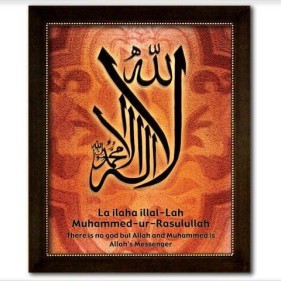
Allaah than those in these ten days. So say tahlil (There is no deity worthy of
worship but Allaah : Laa ilaaha illallaah), takbir (Allaah is the greatest
Allaahu Akbar) and tahmid (All praise is due to Allaah : alhumdulillaah) a lot
[on those days]." [Reported by Ahmad, 7/224; Ahmad Shaakir stated it is
saheeh]
Abu Hurairah relates that the Messenger
of Allaah (sallallaahu'alaihi wa sallam) said, "There are no days more
loved to Allaah for you to worship Him therein than the ten days of Dhul Hijja.
Fasting any day during it is equivalent to fasting one year and to offer salatul
tahajjud (late-night prayer) during one of its nights is like performing the
late night prayer on the night of power. [i.e., Lailatul Qadr]." [This is
related by at-Tirmidhi, Ibn Majah, and al-Baihaqi]
Ibn' Umar narrated that at Mina, the
Messenger of Allaah (sallallaahu'alaihi wa sallam) said, "Do you know what
is the day today?" The people replied, "Allaah and His Messenger know
it better." He said, "It is the forbidden (sacred) day. And do you
know what town is this?" They replied, "Allaah and His Messenger know
it better." He said, "This is the forbidden (sacred) town (Mecca). And
do you know which month is this?" The people replied, "Allaah and His
Apostle know it better." He said, "This is the forbidden (sacred)
month." The Messenger added, "No doubt, Allaah made your blood, your
properties, and your honour sacred to one another like the sanctity of this day
of yours in this month of yours in this town of yours."
Narrated Ibn' Umar: On the Day of Nahr
(10th of Dhul-Hijja), the Messenger (sallallaahu'alaihi wa sallam) stood in
between the Jamrat during his Hajj which he performed (as in the previous Hadith)
and said, "This is the greatest Day (i.e. 10th of Dhul-Hijjah)." The
Messenger (sallallaahu'alaihi wa sallam) started saying repeatedly, "O
Allaah! Be Witness (I have conveyed Your Message)." He then bade the people

farewell. The people said, "(This is Hajjat-al-Wada)." [Bukhari 2.798]
Fasting Day of Arafat
Abu Qatadah reported that the Messenger
of Allaah (sallallaahu'alaihi wa sallam) said, "Fasting on the day of 'Arafah
is an expiation for two years, the year preceding it and the year following it.
Fasting the day of 'Ashurah is an expiation for the year preceding it."
[This is related by "the group," except for al-Bukhari and at-Tirmidhi]
Hafsah reported, "There are five
things that the Messenger (sallallaahu'alaihi wa sallam) never abandoned:
fasting the day of 'Ashurah, fasting the [first] 10 [days of Dhul-Hijjah],
fasting 3 days of every month and praying two rak'ah before the dawn
prayer." [This is related by Ahmad and an-Nasa'i]
'Uqbah ibn'Amr reported that the
Messenger of Allaah (sallallaahu'alaihi wa sallam) said, "The day of 'Arafah,
the day of sacrifice, and the days of tashreeq are'ids for us--the people of
Islam--and they are days of eating and drinking." [This is related by
"the five," except for Ibn Majah. At-Tirmidhi grades it sahih]
Abu Hurairah stated, "The Messenger
of Allaah (sallallaahu'alaihi wa sallam) forbade fasting on the day of'Arafah
for one who is actually at 'Arafah." [This is related by Ahmad, Abu Dawud,
an-Nasa'i, and Ibn Majah]
At-Tirmidhi comments: "The scholars
prefer that the day of 'Arafah be fasted unless one is actually at 'Arafah."
Takbeer
It is Sunnah to say Takbeer ("Allaahu
akbar"), Tahmeed ("Al-hamdu Lillaah"), Tahleel ("La ilaha
ill-Allaah") and Tasbeeh ("Subhaan Allaah") during the first ten
days of Dhul-Hijjah, and to say it loudly in the mosque, the home, the street
and every place where it is permitted to remember Allaah and mention His name
out loud, as an act of worship and as a proclamation of the greatness of Allaah,
may He be exalted. Men should recite these phrases out loud, and women should
recite them quietly.
Allaah says (interpretation of the
meaning)
"That they might witness things that
are of benefit to them (i.e., reward of Hajj in the Hereafter, and also some
worldly gain from trade, etc.), and mention the name of Allaah on appointed
days, over the beast of cattle that He has provided for them (for sacrifice)..."
[al-Hajj 22:28]
The majority of scholars agree that the
"appointed days" are the first ten days of Dhul-Hijjah, because of the
words of Ibn Abbas (may Allaah be pleased with him and his father), "The
appointed days are the first ten days (of Dhul-Hijjah)."
The Takbeer may include the words "Allaahu
akbar, Allaahu akbar, la ilaaha ill-Allaah; wa Allaahu akbar wa Lillaahil- hamd
(Allaah is Most Great, Allaah is Most Great, there is no deity worthy of worship
but Allaah; Allaah is Most Great and to Allaah be praise)," as well as
other phrases.
Takbeer at this time is an aspect of the
Sunnah that has been forgotten, especially during the early part of this period,
so much so that one hardly ever hears Takbeer, except from a few people. This
Takbeer should be pronounced loudly, in order to revive the Sunnah and as a
reminder to the negligent. There is sound evidence that Ibn Umar and Abu
Hurairah (may Allaah be pleased with them) used to go out in the marketplace
during the first ten days of Dhul-Hijjah, reciting Takbeer, and the people would
recite Takbeer when they heard them. The idea behind reminding the people to
recite Takbeer is that each one should recite it individually, not in unison, as
there is no basis in Sharee'ah for doing this.